A regular question asked by visitors to the Heritage Collection relates to the town’s name and when exactly ‘St Monance’ became ‘St Monans’. Although it is generally accepted that there was an official change, few seem to remember when that actually was.
Given the absence of social media and the traditional festive break, for most folk the answer would be January 1974 as that was when it was first widely reported in the press. Very much a case of ‘ringing in the new’.
However, for historical accuracy, it was more a case of ‘ringing out the auld’ as official approval for the name change appears finally to have been given on Dec. 17, 1973 – it just took a while to get the news out.
Up until then, the salt-sprayed burgh had a variety of names and spellings, since it morphed from the older name of Inverin/ Inverie/ Inweary etc. (meaning ‘at the mouth of the stream’) into the multiple ‘Saint M’ versions.
Many variations came and went but the field was finally narrowed down to just two contenders, St Monance and St Monans, and they existed side by side for generations. As far back as the early 17th century, ‘St Monans’ was the name on many maps but over the years St Monance became equally dominant in usage.
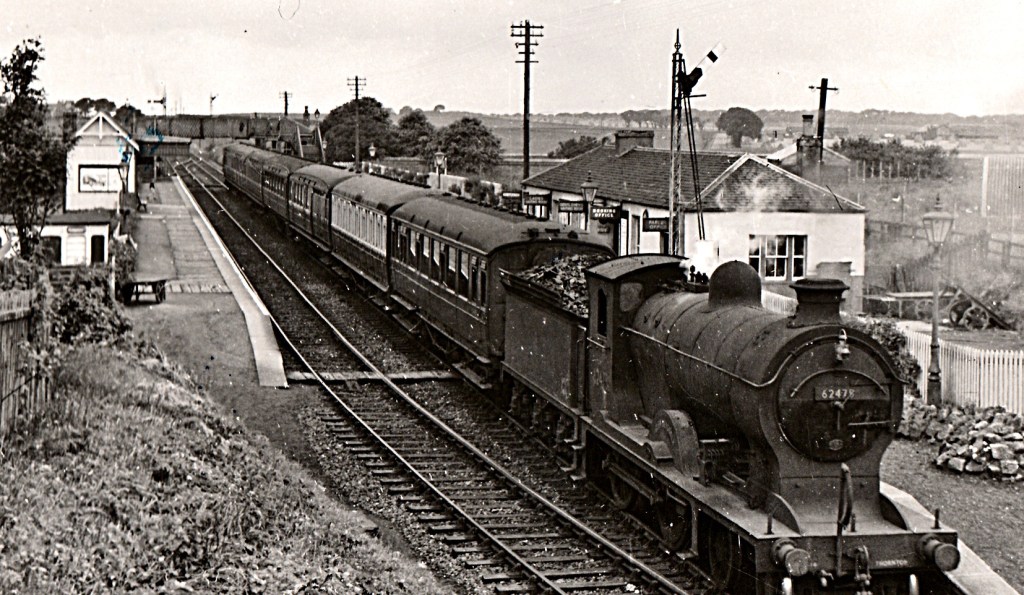
It was claimed the latter came to prominence at the behest of the railway companies but there is some evidence that spelling was already in circulation before the tracks reached the East Neuk.
Matters appeared to be coming to a head in the 1890s when the East Neuk of Fife came under the scrutiny of ordnance surveyors. This sparked a debate in the national press and Ralph Anstruther, at his desk at Balcaskie, believed it was an “opportune” time to offer his considered view.
In a letter to the Scotsman newspaper, he outlined the many variations of the name through the ages, but asserted: “It appears to be generally agreed that the saint or hermit from whom the name is derived was Saint Monan. If this is so, it is evident that St Monan’s is the correct way to spell the name of this town. To my mind this is not only correct, but also more pleasing.”
As an aside, it is worth noting that the case was being put forward for an ‘apostrophised’ name. This is a punctuation mark north-east Fife appears none too fond of, given St Michaels, St Andrews, and the university town’s respected, but grammatically incorrect, boarding school, St Leonards.
However, the view from Balcaskie was not shared by all. Another letter writer, under the nom de plume ‘Grip Fast’, was aghast at the emergence of the ‘new‘ name sneaking into official usage without any formal record or consultation with the community, describing it as an “illiterate and vulgar blunder” and, thus, “a good reason for the inhabitants sticking to the ‘ance’.”
And it seemed the name ‘St Monance’ was here to stay with the town council formally adopting that title when the town obtained burgh status after World War One.
But that wasn’t the end of the matter.
According to Aitken Fyall’s definitive book St Monans: History, Customs and Superstitions (1999), there was a showdown on the name at a town council meeting in April 1933 that proves this was an enduring and unresolved issue. Messrs Guthrie and Marr moved that ‘St Monance’ be adhered to. Messrs Miller and Dunn called for ‘St Monans’ to be adopted. By a narrow five votes to three, St Monance won out.
Fast forward to 1963 and the name issue made the headlines in the Scotsman newspaper, the particular headline being ‘St Monan’s moan’.
It was reported that, at an April meeting of the town council, a letter was considered by Miss M. Cottell of Elie that advocated abandoning the St Monance spelling in favour of St Monan’s. In considering the matter, it was again claimed that the ‘ce’ variant came from a dispute between the local post office and the railway station, with the PO bosses winning the case for St Monance being retained.
Once again, the suggested name change apparently included that apostrophe. But whatever the favoured punctuation, town clerk Frank Patterson pointed out that the spelling was St Monance on the new burgh coat of arms and seal, so, essentially, it was now a done deal.
The debate continued unresolved until 1974 when a legal loophole saw ‘St Monance’ ditched and the old, and original, spelling installed as the official name.
Town clerk Agnes Gardner explained to the Scotsman newspaper that under the Local Government (Scotland) Act of 1947, such a name change could not be made without approval from St Andrew’s House. However, the Act had been repealed and the regulation not replaced before the introduction of the Local Government (Scotland) Act 1973.
The Scotsman reported: “In the absence of any real guidance, the town council then asked the regional steering committee of Fife Country Council for approval. This was duly given.
Thanks to research carried out by Maia Sheridan, manuscripts archivist at the University of St Andrews, we know that approval was given by the steering committee on December 17 and notified to St Monance Burgh Council via letter on December 20. The recorded reaction was simply:”This was considered to be highly satisfactory”
Apparently there was little practical impact, other than the Post Office changing the franking stamp at St Monans sub-post office, and the regional authority stating that road signs would be replaced as and when required.
It was accepted there would be two versions of spelling for a while. Such an example could be found within the columns of the local newspaper that served the East Neuk, the East Fife Mail.
The editor at 7 Mitchell Street, Leven, lan C. Paterson, changed the house style, though references to the kirk retained the old spelling for a number of years. So, much to the confusion of the editorial staff, St Monance Parish Church lay within the Burgh of St Monans.
But even that compromise passed, with St Monans now established as the sole and rightful name.
Jerzy Morkis (2023)
 The St Monans Heritage Collection